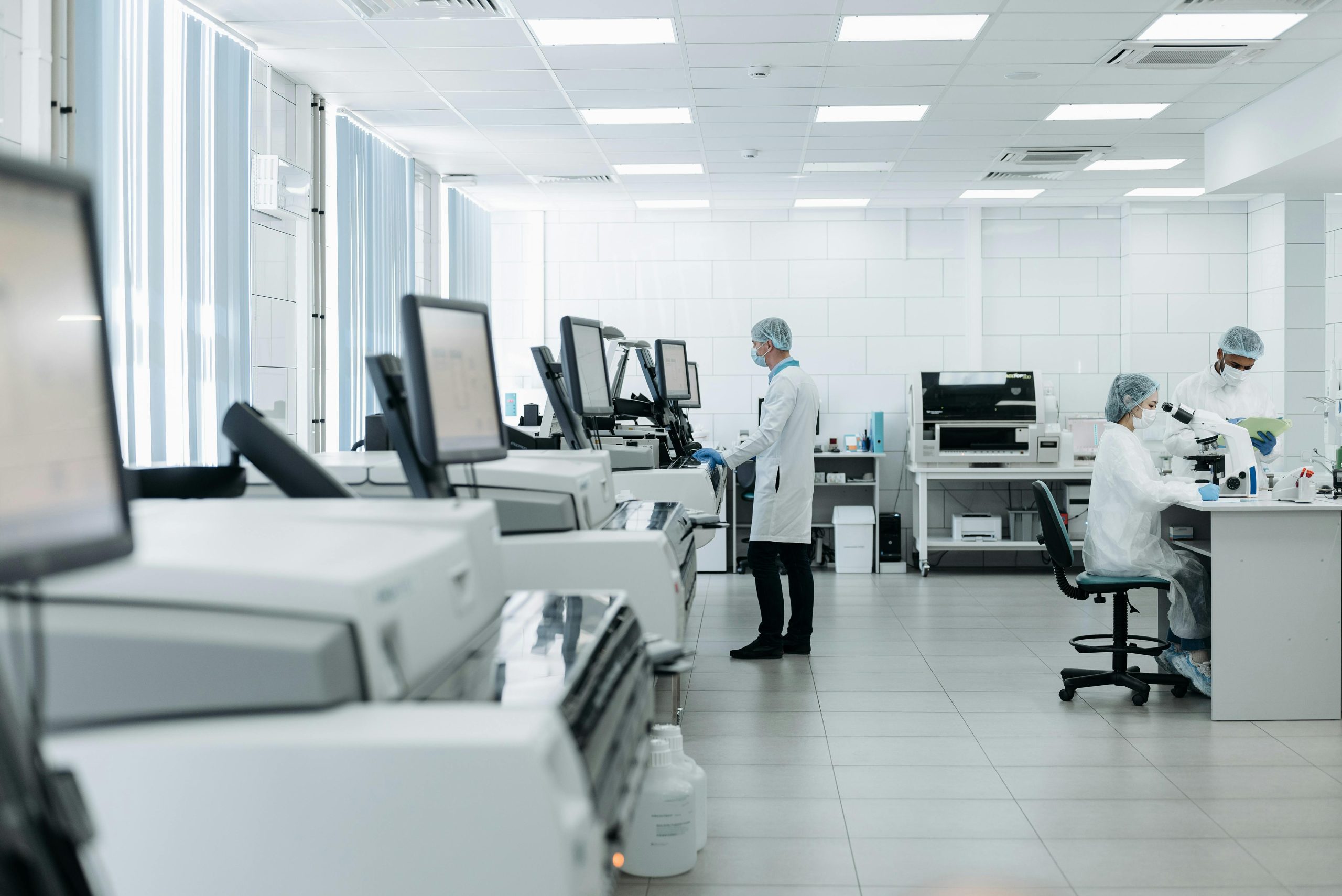
ReWAdd brings together five organisations from five countries — combining academic excellence, public research and industrial expertise to turn wastewater into a verified source of clean water, recovered nutrients and renewable energy.
5
Partners
5
Countries
Spain · Denmark · Portugal · Brazil · Germany
3
Universities
1 national research lab · 1 industrial SME
Coordinated by the Electrochemical Engineering group (IEC) at Universitat Politècnica de València
Five partners, one shared challenge
ReWAdd’s strength lies in the complementarity of its partners. Each organisation contributes a distinct piece of the puzzle — from electrochemistry and microbial bioengineering to membrane separation, advanced oxidation, life-cycle assessment and industrial deployment. Together, they cover the full innovation chain, from laboratory proof-of-concept to industrial pilot validation.
View
Coordinator · Valencia, Spain · Public university Group: Electrochemical Engineering
Universitat Politècnica de València
The Electrochemical Engineering group at the Universitat Politècnica de València conducts basic and applied research using electrochemical processes to address challenges in water sustainability, clean energy and the circular economy. Its main area of expertise is the development and electrochemical characterisation of materials and processes, with applications including the electrochemical oxidation of contaminants of emerging concern, batteries, the synthesis of green hydrogen by electrolysis, and the selective recovery of valuable resources from waste streams — such as nutrients and critical raw materials — using electromembrane reactors.
Role in ReWAdd. Beyond its coordinating role, UPV is involved in the scientific tasks related to the recovery of nutrients from urban wastewaters by means of electrodialysis and the removal of organic micropollutants by means of electrochemical oxidation.

Partner · Lyngby, Denmark · Public university Group: Microbial Electrochemistry and Environmental Technologies — Department of Environmental & Resource Engineering
Technical University of Denmark · DTU
The Microbial Electrochemistry and Environmental Technologies group at DTU conducts interdisciplinary research at the interface of environmental electrochemistry, biotechnology and resource engineering. The group focuses on understanding and engineering sustainable technological solutions for water treatment, resource recovery, and carbon capture and utilisation, with a strong track record in translating scientific discoveries into scalable environmental technologies that support circular-economy and climate-neutrality goals.
Role in ReWAdd. The DTU team focuses on advanced electro-biotechnological solutions for pollutant removal and resource valorisation. The group is developing a bio-solar hybrid photoelectrochemical oxidation system; in parallel, the team is designing and upscaling systems for single-cell protein production from nutrient-rich streams using hydrogen-oxidising bacteria.

Partner · Lisbon, Portugal · National research laboratory. Unit: Urban Water Unit (NES)
Laboratório Nacional de Engenharia Civil · LNEC
The Urban Water Unit (NES) of LNEC conducts leading R&D&I and advanced consultancy in the urban water cycle and related systems — urban water supply, wastewater and rainwater management, water reuse, industrial water and wastewater management, collective irrigation systems, and resource recovery (water, energy, nutrients, wastes) within a circular-economy approach. Its water and wastewater treatment activities focus on performance assessment, life-cycle assessment and benchmarking of treatment processes, and on developing advanced and alternative treatment solutions for the removal of contaminants of emerging concern, safe water reuse and safe discharge — maximising synergies with installed conventional physical-chemical and biological treatments.
Role in ReWAdd. LNEC leads WP4 — Pilot tests, techno-economic assessment and LCA, gathering the results of the process schemes investigated in ReWAdd, evaluating their techno-economic performance and analysing their potential scalability. LCA of the most promising schemes will be performed in terms of water quality, added-value product yield and techno-economic performance.

Partner · Porto Alegre, Brazil · Public university. Laboratory: LACOR — Corrosion, Protection and Recycling of Materials Laboratory (founded 1974)
Universidade Federal do Rio Grande do Sul · UFRGS
LACOR conducts basic and applied research focused on sustainable solutions in materials engineering and environmental technologies. Its activities are structured around three main areas: corrosion and protective coatings; water and wastewater treatment; and characterisation and recycling of metallic materials. In water and wastewater treatment, the laboratory develops and applies membrane separation, advanced oxidation and electrochemical processes — focusing on the removal of contaminants of emerging concern, resource recovery (e.g. nutrients) and water reuse. LACOR also contributes to circular-economy strategies through the characterisation and recycling of metallic materials, adopting an urban-mining approach to recover valuable elements from waste streams such as WEEE, batteries and metal-mechanic residues.
Role in ReWAdd. UFRGS is involved in the scientific tasks related to the recovery of nutrients from urban wastewaters by membrane separation and the removal of organic micropollutants by advanced oxidation.

Partner · Hanover, Germany · SME · Industry
aqua & waste International GmbH · AW
aqua & waste International is an independent engineering and consultancy firm specialising in environmental protection. Founded in 2002, the company has successfully implemented projects worldwide — across LATAM, Asia, MENA and Europe — focusing on resource recovery and energy efficiency in urban and industrial wastewater and sludge treatment and management. AW also operates in stormwater management, solid waste, energy & biogas, GHG-emission reduction and overall project management. Its range of services covers (pre-)feasibility and baseline studies, detailed planning and design, technical guidelines, regulatory review, optimisation, R&D and turnkey project implementation. Further activity fields include water reuse, circular economy, sludge valorisation, simulation and modelling, and capacity building.
Role in ReWAdd. AW conducts on-site pilot tests with real industrial wastewaters (food sector) in Germany, bridging the gap between the lab phase and industrial application. Long-term performance of the process schemes will be assessed in terms of energy requirement, technical viability, scalability, added-value throughput, CAPEX and OPEX. AW will also define prospects for further TRL development beyond the project, lead the exploitation plan and support dissemination activities.

Early Career Researchers
Early Career Researchers at the heart of ReWAdd
The Water4All Joint Transnational Call 2024 explicitly supports projects that strengthen the next generation of water researchers. ReWAdd takes that commitment seriously: a substantial share of the project’s research effort is carried out by PhD candidates and postdoctoral fellows distributed across the five partners — working hands-on with cutting-edge technology and across borders.
Why ECRs matter in ReWAdd
ReWAdd’s Early Career Researchers are not just contributors — they are the people who will carry the project’s knowledge forward. Their work spans electrochemistry, membrane science, microbial engineering, modelling and industrial deployment. They co-author scientific publications, present at international conferences and take part in transnational secondments between partner labs.